Tap to enlarge
Coca-Cola
Zero Sugar
200ml · Belgium · 2026
BrandCoca-Cola
Drink NameZero Sugar
Type of DrinkCola
Year2026
CountryBelgium
Can ColoursBlack, Red, White
Size200ml
Limited EditionNo
Multipack CanNo
Notes
Nobody paid for this one.
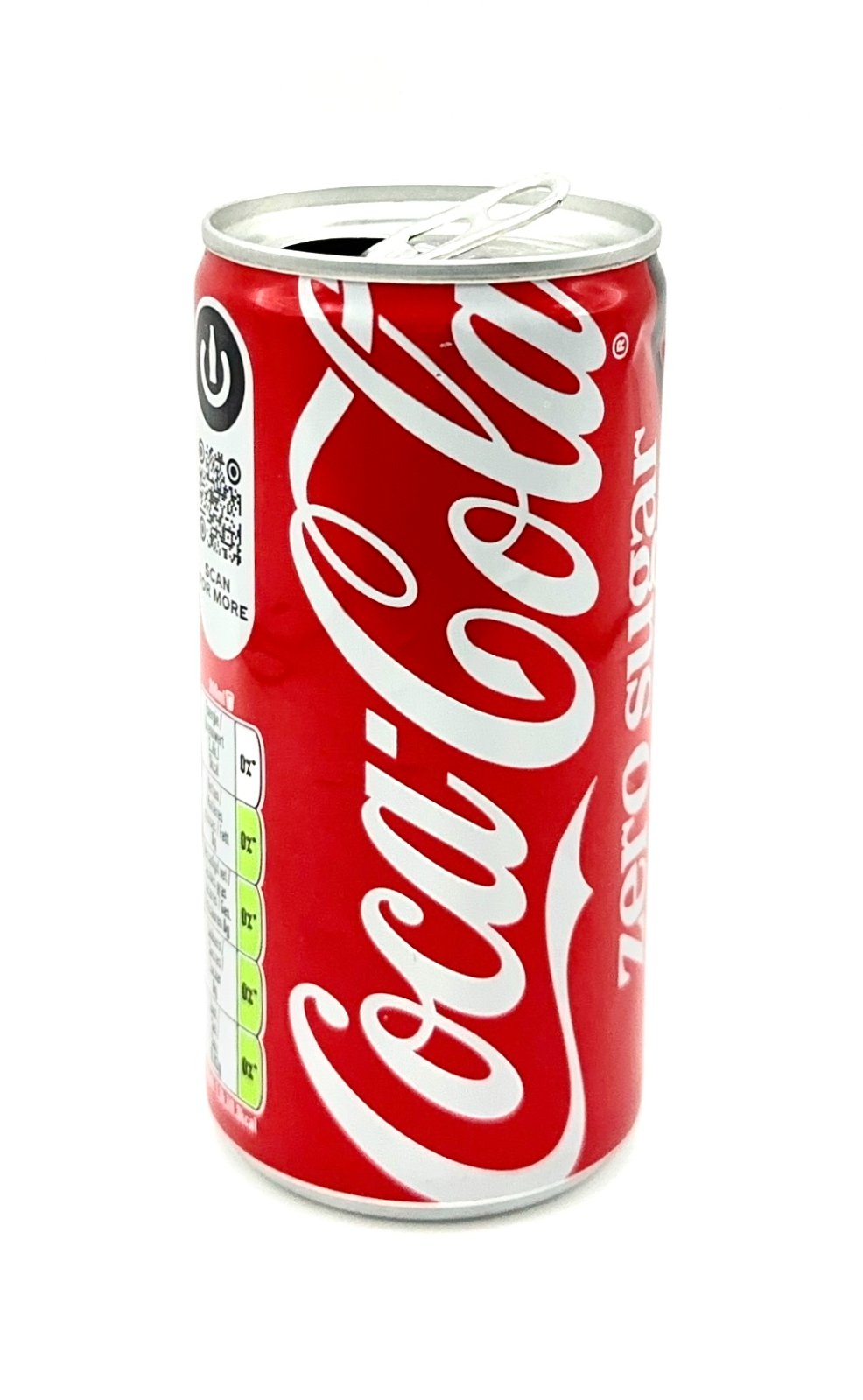
The Coca-Cola Zero Sugar 200ml mini can was handed over free by promotional staff working the streets of Brussels during a hot spell in June 2026, which is the only reason it sits in a British archive.
There is nothing special about the design, and that is rather the point. It carries the standard Coca-Cola Zero Sugar livery, a black body with the red disc and the Spencerian script logo, exactly as it appears on the 330ml and 500ml. What changes is the proportion. Squeezed onto a 200ml can the artwork sits noticeably tighter, the disc taking up far more of the available height, and the whole thing reads as denser and more graphic than the standard format. Coca-Cola has never redrawn the design for the smaller can, so the mini simply crops in, and the result looks deliberate even though it is not.
The 200ml is a normal Belgian retail size rather than a giveaway-only format, sold through Carrefour and other grocers at around 83 cents. That is precisely why it works for street sampling. It is small enough to drink standing up on a pavement, cheap enough to hand out in volume, and cold enough to be genuinely welcome on a hot day in a city centre. Free sampling is among the oldest tactics Coca-Cola has, dating back to the coupons Asa Candler issued in the 1880s offering a free glass, and it survives because handing someone a cold drink outdoors in summer needs no explanation in any language, which matters in a bilingual capital.
The one modern addition is a QR code inviting you to scan for more, taking the drinker from a physical can to Coca-Cola's own digital promotions and prize draws. It turns a giveaway into a data capture, and it is the reason brands still bother with street teams at all.
Inside is Coca-Cola Zero Sugar in its European formulation, which differs from the American one. It is sweetened with aspartame, acesulfame K and enzymatically produced steviol glycosides, with caramel colour E150d, phosphoric acid, natural flavourings including caffeine, and sodium citrates as an acidity regulator. It contains a source of phenylalanine. Coca-Cola Zero launched in 2005 and was reformulated and renamed Coca-Cola Zero Sugar from 2016 onwards.